Hack way to extract Cobalt Strike Configuration
While reversing a Cobalt Strike payload delivered as raw shellcode, I needed a fast way to pull out its configuration.SentinelOne’s CobaltStrikeParser (https://github.com/Sentinel-One/CobaltStrikeParser) initially failed with the following error:
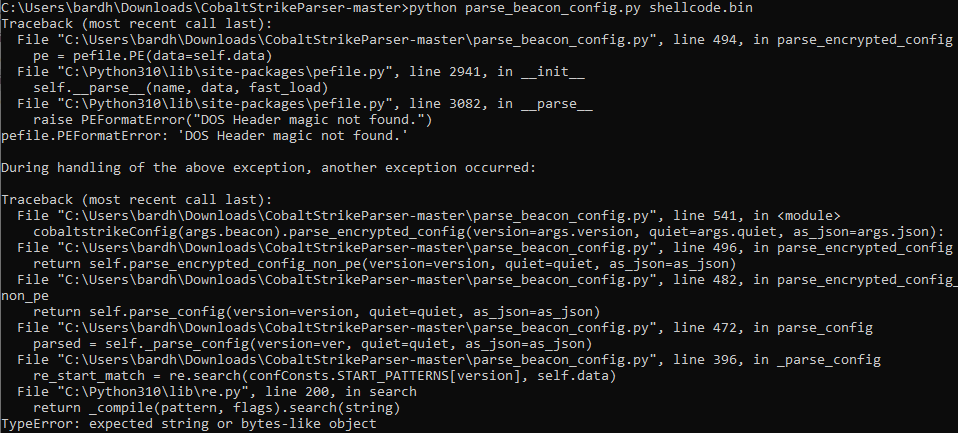
Experience told me that the beacon was probably wrapped in an additional obfuscation layer. If I could locate—and dump—the decrypted beacon in memory, the parser should work as expected.
Decompiling the shellcode in IDA showed a routine that builds a new buffer (labelled v35) and then calls into it:
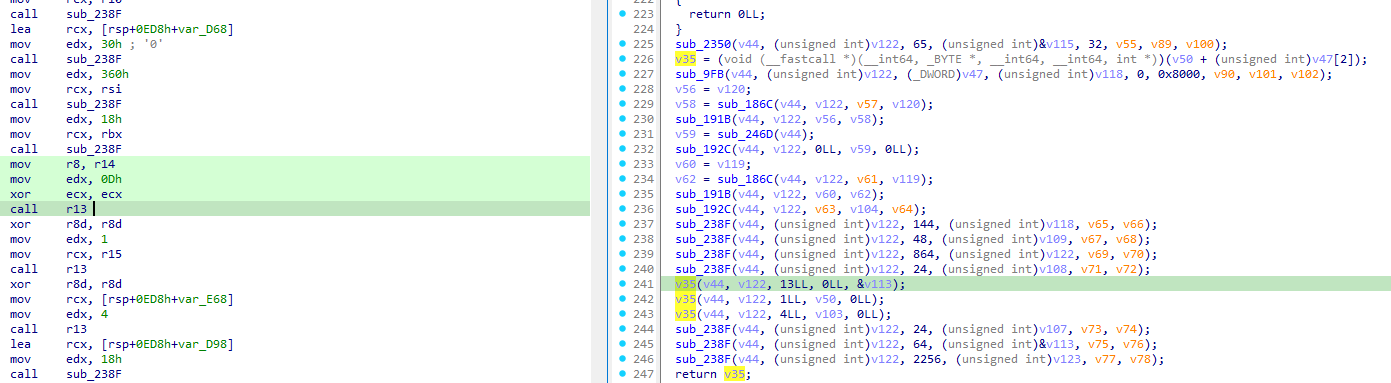
I confirmed this behaviour in x64dbg, setting a breakpoint on the call to v35 and single‑stepping into the newly generated region:
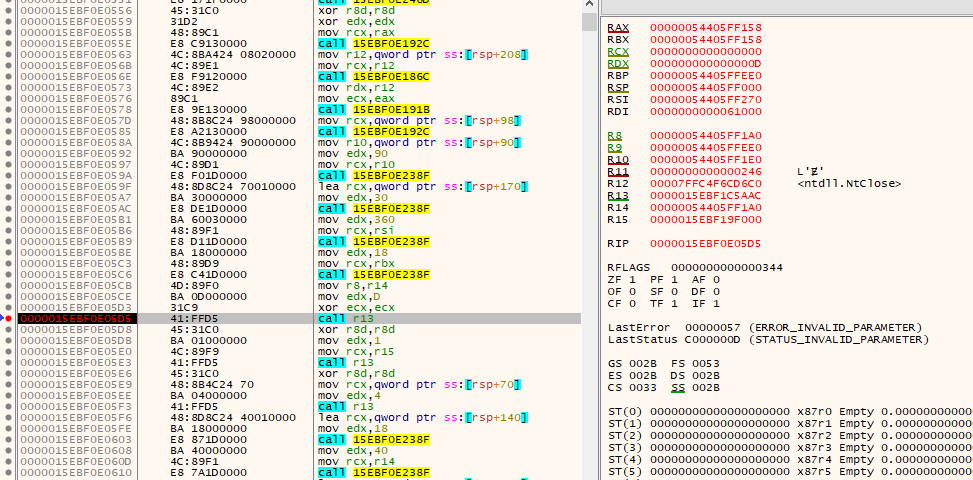
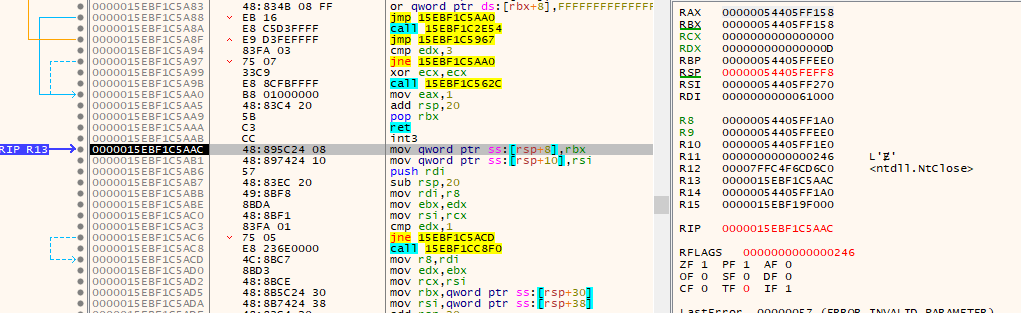
Using x64dbg’s memory map view, I dumped the buffer to disk:

Feeding the dumped blob back into CobaltStrikeParser now succeeds, revealing the full beacon configuration:

By isolating the decrypted payload in memory and bypassing the obfuscation layer, you can quickly extract CobaltStrike configurations—even when the initial parse fails.